
A custom fitting can reduce a slice, but it cannot fully fix one on its own and the biggest changes happen when combining a fitting with coaching.
A slice happens when the clubface is open relative to your swing path at impact. That puts side spin on the ball, curving it away from you, to the right for a right-handed golfer. The bigger the gap between face and path, the bigger the curve.
Two things create that open face: how you swing, and the clubs you swing. Most slices are rooted in the swing, but the wrong equipment can make one worse, and the two are fixed in different ways.
1. Swing-pattern causes (the coaching side):
2. Equipment causes (the fitting side):
A fitting works on the equipment side of the equation. Several changes can make the face easier to square:
Each of these is tested and measured on TrackMan during a fitting, so you can see the effect on your own ball flight rather than taking it on trust.
A fitting cannot rebuild your swing. If the face is arriving wide open because of how you swing the club, the right equipment will manage the symptom and reduce the curve, but it will not remove the cause. Equipment that masks a swing fault can also limit how much you improve over time, so it is not always the right first step.
In a fitting we measure your slice on TrackMan, show you the data and test what actually reduces it for you. So what we can do is lessen that effect by adjusting the lie angle, shaft types or lofts, plus much more but we will only recommend a change if the numbers prove it helps.
If we think a lesson would do more for your slice than a new club, we will say so. There must be real value in any change we suggest.
For most golfers, the best path is both. Coaching addresses the cause of the open face, and a fitting makes sure your clubs support the swing you are building rather than working against it.
We offer coaching alongside fitting, so the two can work together. To understand whether fitted clubs are right for your stage, see our guide to whether custom-fit clubs are worth it.
Anti-slice and draw-biased clubs do work to a degree, by using head design to encourage a square or closing face. They are genuinely helpful for some golfers, but they reduce a slice rather than remove its cause. Pairing them with the right fit and some coaching gives the most lasting result.
If your slice comes from a swing fault, which most do, start with coaching, then fit your clubs to support the improved swing. If your swing is reasonable but your clubs are working against you, a fitting can reduce the slice on its own. Often the best result comes from doing both.
Lie angle affects start direction more than curve and the greatest effect is in the highest lofted clubs, but a lie angle that is too upright or too flat can push your ball offline and feed a slice pattern, particularly in irons. Correcting it as part of a fitting helps the ball start closer to your target line.
A shaft that feels too stiff or is too heavy for your swing can make it harder to square the face in time, which can add to a slice. Fitting a shaft with the right flex, weight and tip profile helps you release the club more effectively. It is one factor among several, not the whole story.
A draw-biased driver helps by shifting weight to encourage the face to close, which can straighten your ball flight. For many slicers it makes a visible difference. It is a help rather than a cure, and works best alongside the correct shaft and loft for your swing.
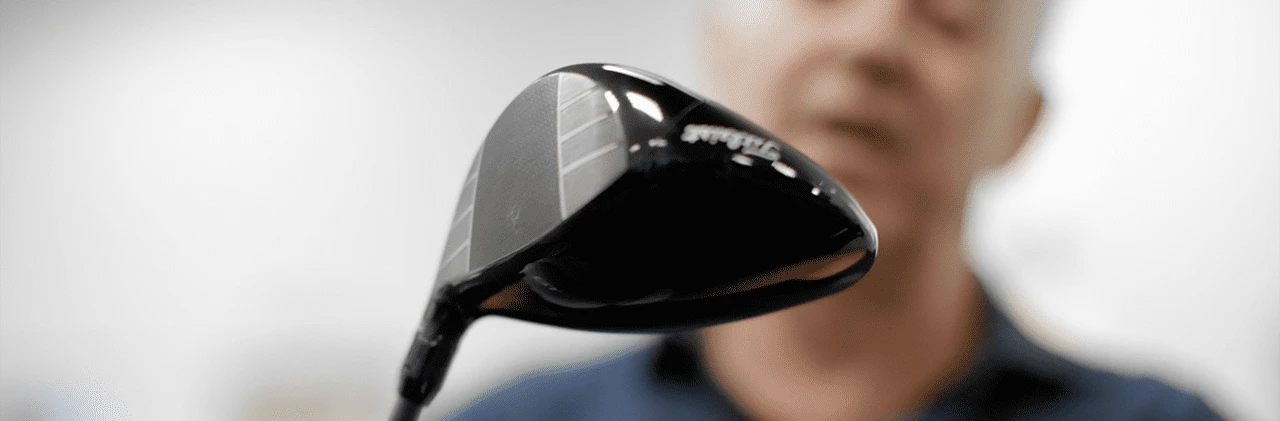
The right driver can reduce a slice, not guarantee it’s fix. A draw-biased or higher-MOI head, the correct loft and a suitable shaft all make it easier to square the face at impact. They manage the side spin that causes a slice, but they do not change the swing that creates it.